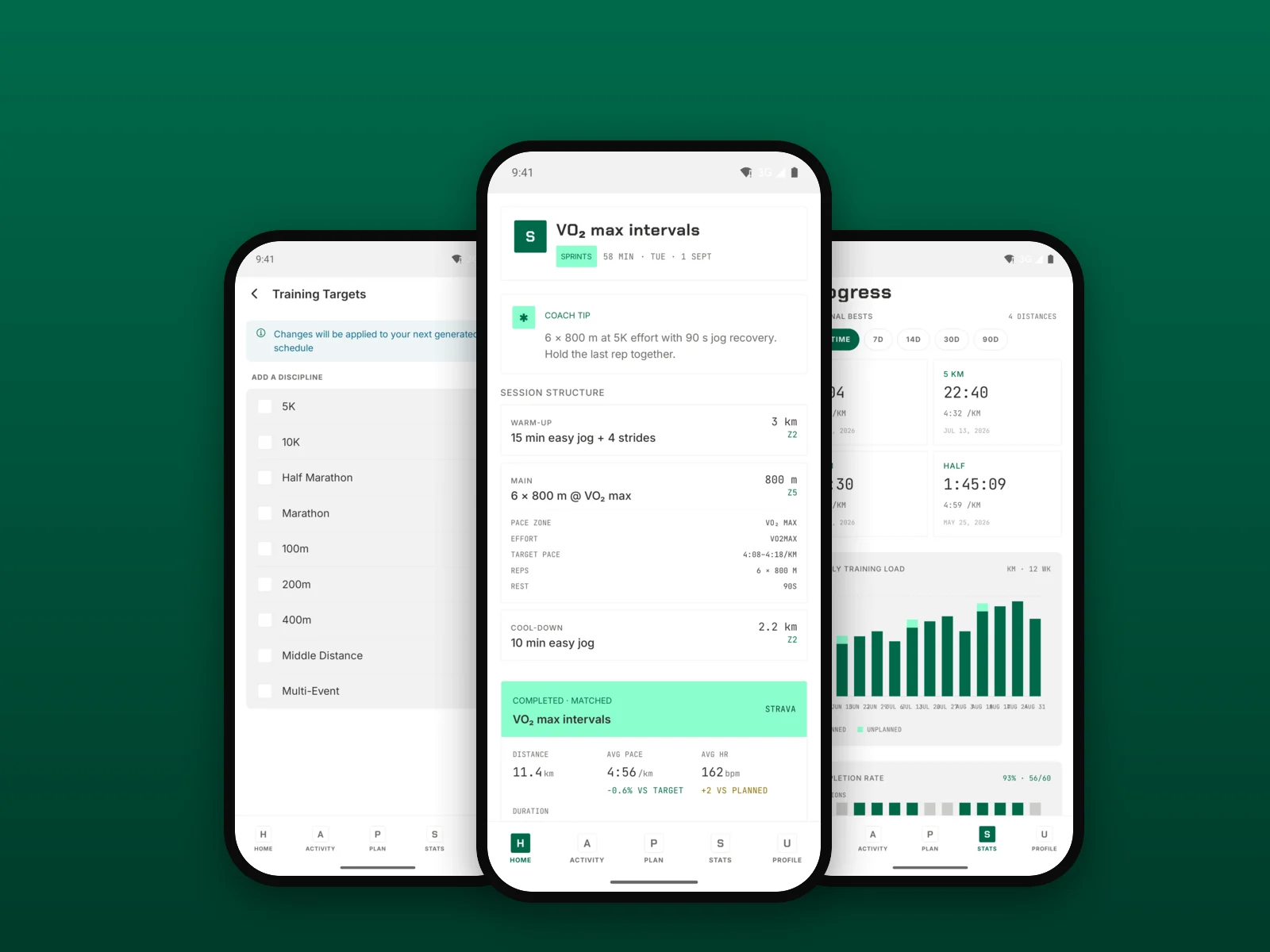
Built around your schedule, not the other way around.
Tell TrainPlan which days you can run. It builds the week from what you actually have, not what a generic plan assumes.

HEPTATHLON · DECATHLON
Multi-event training that doesn't leave you to stitch together seven or ten separate programmes. TrainPlan sequences sprints, jumps, throws, and endurance so each discipline gets its time without starving the others.
Free for 30 days. Then €9.99/month or €69.99/year. Cancel anytime.
Tell TrainPlan which days you can run. It builds the week from what you actually have, not what a generic plan assumes.
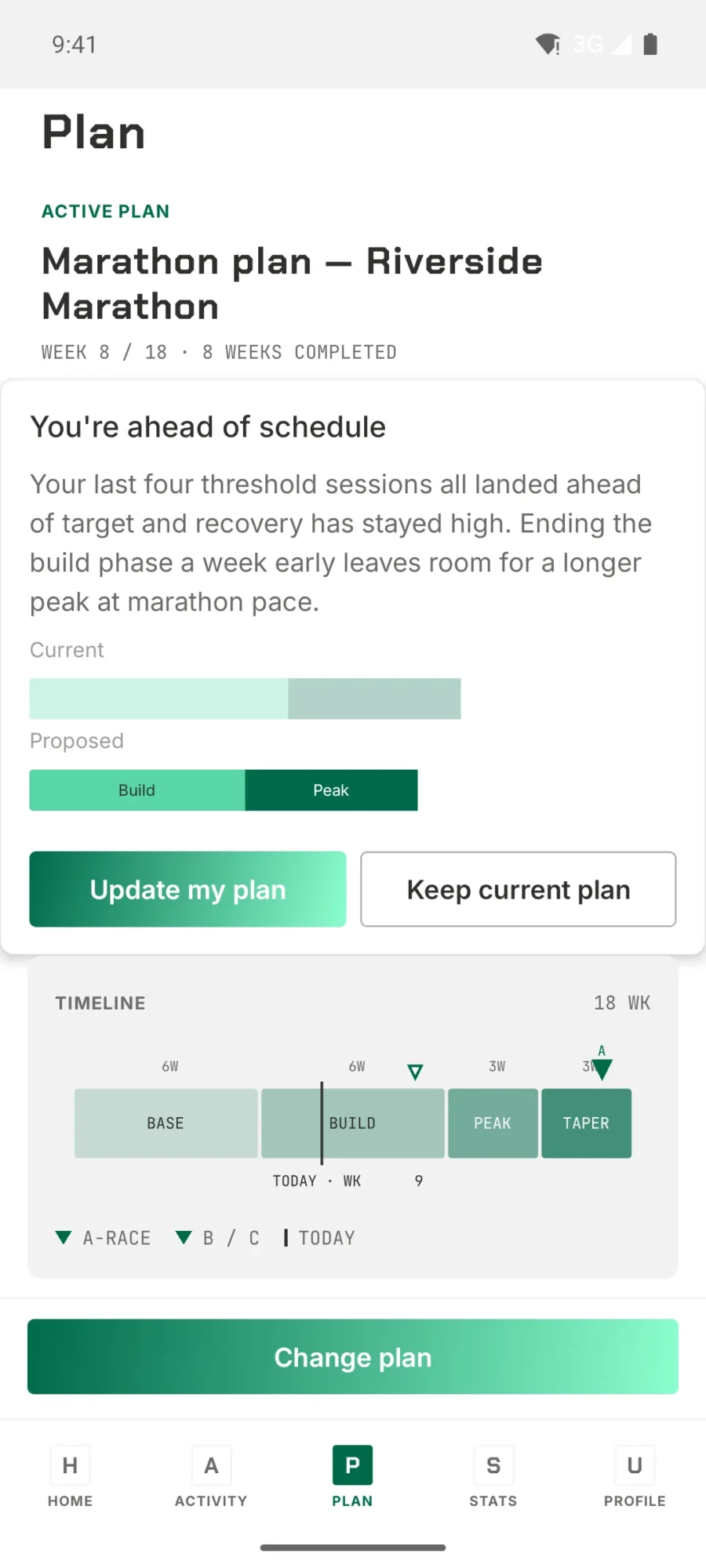
Missed a session? HRV tanked? Heart rate spiked on what was meant to be an easy run? The plan rebuilds the next week accordingly, and tells you exactly what changed.
Heavy lifting doesn't land the day before a max-velocity sprint. Long runs don't precede a hurdles technical day. The plan knows which events compromise which, and keeps them separated in the week.
SAMPLE WEEK — DECATHLON
Five training days, two rest days. Technical work leads the week; strength slots around it so heavy lifting never precedes a high-CNS technical session.
Monday
Speed
Sprint + jumps technical (90 min)
Max effort
Tuesday
Strength
Heavy lower-body lift (60 min)
—
Wednesday
Rest
Rest or mobility + medicine-ball drills
—
Thursday
Speed
Throws + pole vault technical (75 min)
Technical
Friday
Rest
Rest
—
Saturday
Threshold
Hurdles technical + 400m reps (75 min)
Zone 4
Sunday
Long
1500m time trial or 30 min threshold run
Zone 3–4
Heptathletes swap pole vault and the second throws session for additional hurdles technical and 200m race-pace work. Masters athletes add a second rest day in place of Saturday's hurdles session.
IN THE APP
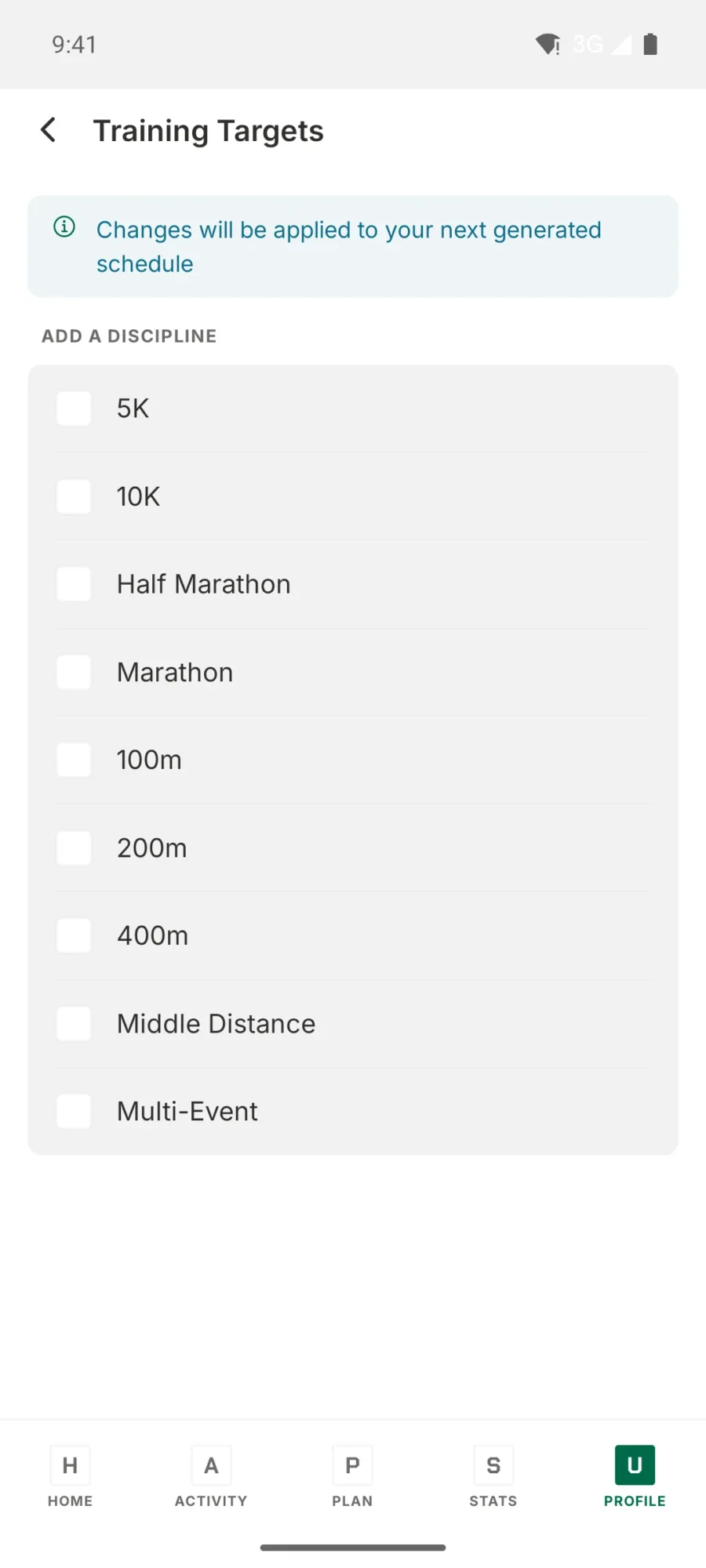
Set the events you contest, and the running portions land in a single coherent block.
ANNUAL STRUCTURE
Strength base, aerobic endurance, technical refresh on every event at submax speed. The widest-ranging phase.
Event-specific intensity rises. Indoor season races appear as tune-ups, not peaks — the plan treats them as test events.
Race-pace work, full-effort technical days, taper micro-cycles into each competition. Outdoor target meets peak in this window.
Active recovery, deload, optional reduced-volume block. The plan prescribes what to do between seasons so returning isn't harder than it needs to be.
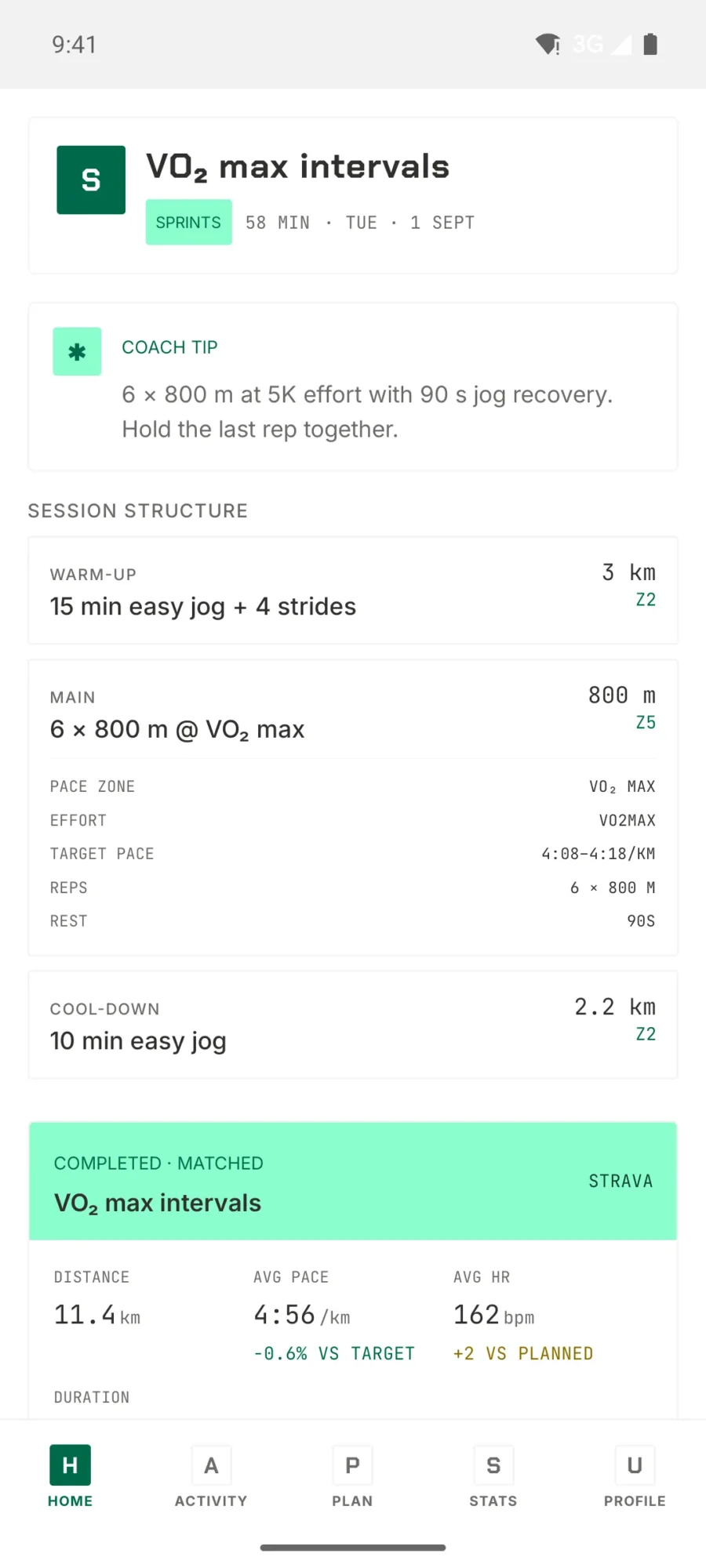
The plan sequences technical days across a weekly cycle so every event gets practised — and the recovery demand never stacks.
Heavier weekly load, two-day micro-cycles to cover every discipline. Strength and endurance are fitted around the technical calendar.
You sprint, or jump, or throw — now you want to combine events. The plan ramps the new disciplines one per block so the learning load is survivable.
Extra recovery, fewer technical sessions per week, smarter session ordering. The plan treats recovery as a training variable, not a luxury.
Current fitness from a test event or recent activity. HRV trends where your watch reports them. Sleep patterns across weeks, not just last night. Your rating after each session — 'how did that feel?'
Gym tier (none, home, commercial). Running shoes and treadmill availability if you share them. Cross-training sessions pick themselves from what you can reach — not what we wish you had.
Days you can't run. Preferred session times. Injury or movement exclusions. Other races in the same block. The plan respects all of them without needing a nag.
WATCHES & PLATFORMS
Sync your runs automatically. TrainPlan reads heart rate, HRV, sleep, and pace to keep every session honest.
FAQ
You pick at setup. The plan sequences technical sessions across the week so every event in your set is touched, and the work-rest ordering never lands heavy lifting the day before a high-CNS event.
The plan builds the week technical-first, then slots strength into the days with the lowest neuromuscular cost. You won’t see a heavy squat session scheduled twenty-four hours before a max-velocity day.
Yes — that’s the shape of the specific-prep phase. Indoor meets count as test events. The plan pulls them forward as data and plans outdoors around your indoor result.
Mock competitions — back-to-back event days in block format — show up two to three times a year. The plan debriefs each and adjusts the rest of the cycle from your actual performance, not projections.
For event technique, ideally yes. The plan doesn’t replace a throws coach or a hurdles coach — it sequences when you train each event and how hard, while your coaches own the technical detail.
READY?
Thirty days free. Heptathlon or decathlon — the plan handles the shape of the year.
Free for 30 days. Then €9.99/month or €69.99/year. Cancel anytime.
Ready to switch?
We use cookies to optimize your experience on the website, analyse traffic on our website and to show relevant ads to thirds. Read more about how we use cookies and how you can customize your preferences by clicking on “Settings”. If you agree with our cookie policy, click "Accept all”.